08 April 2011

Plate River Sandhill Cranes

The harbinger of spring that I look forward to each year in Montana is the arrival of tens of thousands of snow geese that stop over at Freezout Lake for several weeks in late March and early April. Some years, upwards of a quarter million of them can be viewed on the ponds and in the surrounding grain fields. It is a great spectacle that is attended by more and more people each year. This year, Kathy and I decided to try a different spectacle - the sandhill cranes that stop along the Platte River in Nebraska during their migration north each March. It was a great decision on our part.

The Platte River originates in the mountains of Colorado and Wyoming and flows through the grasslands and farmlands of southern Nebraska, where it slows down and forms many islands and sandbars. These features along with adjacent fields mostly of corn provide ideal conditions for night-time security and daytime feeding for sandhill cranes. LOTS of cranes! Estimates are that during the peak of migration, upwards of a half million cranes can be found along the 60-70 mile section of the Platte from North Platte to Grand Island.

A late departure from Helena placed us in Buffalo, WY the first evening of our journey. With more than 600 miles to go to our destination, we departed early the next morning. By the time we reached North Platte, driving along the Interstate Highway, flocks of cranes could be seen in most all of the corn fields on either side of the highway. As we neared our destination of Kearney, Nebraska, late in the afternoon, I phoned Steve, my local contact, to discuss what we should do that evening. Steve was a very accommodating host and insisted that he meet me on the the river for an evening of crane watching. So instead of checking into our motel, we met Steve at a local truck stop and after exchanging introductions and pleasantries, he lead me through beautiful Platte River bottom-lands to the river. We were a little early for the cranes to begin arriving for their evening roost, but the weather was pleasant and the skies partly cloudy. It was a fortuitous decision to visit the river that evening because the weather would go down hill the next several days.

As the cranes began approaching the river, the setting sun reflected off of them as a gold-tinged glow. Remember, you can click on the image to enlarge it, and then click you back button to return to the blog. And then as the sun began to set, it was a gorgeous sight, with thousands of cranes settling in on islands just down river from us. It was not easy to come up with an estimate of numbers but there were likely tens-of-thousands by the time we parted the river.I was up early the next morning so that I could approach the river in darkness so as to not disturb any cranes that might have settled on islands closest to the shoreline. Unfortunately, it was quite cloudy and visibility was poor. About 100 yards from the river bank, I got on my hands and knees in the willows and worked my way toward the river where cranes were boisterously welcoming the first hint of dawn. Despite my efforts at caution, cranes on the island closest to shore detected my presence and flushed to join the other hoards a little farther from shore. But thousands remained within 150 yards or so. I chose a comfortable spot along the riverbank with some shrub cover for concealment and waited for more light to illuminate the river and birds. As darkness began to recede, the sight and sounds of thousands of sandhill cranes roosting on the islands before me was fantastic. Freezout snow geese, your spectacle has been matched and - in my mind - surpassed.
One aspect of this Platte River crane spectacle is that, unlike some other birding excursions, there is not much "down time". After the morning departure show, cranes can be found in the myriad cornfields along 60+ miles of river area. Besides just being able to watch thousands of birds as they feed, you can occasionally get lucky -as we were - and find some cranes involved in their unique courting rituals. These rituals involve various forms of bowing, jumping in the air, wing flapping, and picking up pieces of vegetation and throwing them in the air. Very entertaining viewing!!

The last evening we were there, Kathy and Steve's wife Leisa joined us on the river. That evening, in spite of some rain and snow showers, the crane show was even more spectacular than the night before. My estimate for the evening was 40,000+ cranes settling on islands not far down river from where we were sitting. The next morning, we awoke to several inches of snow on the ground so my crane viewing exploits were over for this trip. Click on the video clip below. Please excuse the poor quality.

The Platte River Crane show really may be one of the great spectacles of nature in the world! If you get the opportunity to witness it, you will have no regrets!

02 March 2011

Magnificent Machu Picchu!

In 1965, while attending graduate school at Purdue University, I had a roommate who had been in the Peace Corps in Peru. In the process of getting acquainted, he raved about his visit to Machu Picchu while he was there. Ever since then, this ancient Inca city has been on my wish list of places to visit. It has been said that you can't take a "bad" photo at Machu Picchu! I read that somewhere(and doubted it) before we visited this fantastic ancient enclave in December 2010. But in the process of sorting through the hundreds of photos I took over a two day visit, I concluded that the statement is close to the truth. Machu Picchu did not disappoint! When we walked through the entrance gate and this magnificent architectural wonder appeared before us, I was absolutely awestruck! It is not only an engineering and architectural marvel, but its location high above the Urabomba River Valley must have posed tremendous logistical challenges to its construction.As testament to its difficult and remote location, Machu Picchu was not discovered by modern man until 1911. And its founder, Hiram Bingham, likely had help from local natives of the area. Historical and archaeological evidence indicated that the complex was constructed and inhabited for no more than about 90 years - 1450 to 1540. Fortunately, it was never found and destroyed by Spanish conquistadors as were many other Inca Empire cities and fortresses.The intricacy and preciseness of the stonework are a sight to behold and are unsurpassed anywhere else in the world. Even today, it is difficult to impossible to match the precision with which this ancient culture constructed this and other Inca buildings. Llamas are common among the ruins and do a great job of keeping the grass and other vegetation at manageable levels in areas that would be difficult to access with machinery.Our first day at the site was partly cloudy to sunny. But clouds, rain, and fog moved in overnight and we awoke to what was probably a more common weather pattern for this high elevation in the mountains. But the fog and mist shrouding the adjacent mountains and parts of the complex added a surreal and mystical aspect to our visit. As we headed down the mountain on the single lane access road (with 13 switchbacks), I had a sense of fulfillment in finally experiencing this magical place that I had first set sights on visiting 45 years earlier. And I also felt grateful for how fortunate I was to be able to visit Machu Picchu, one of the most magnificent places on earth.

Oh, you were wondering about birds! I did do some looking and saw some good ones, but taking in the marvel of this place occupied most of my time!

29 January 2011

Galapagos Wading & Water Birds

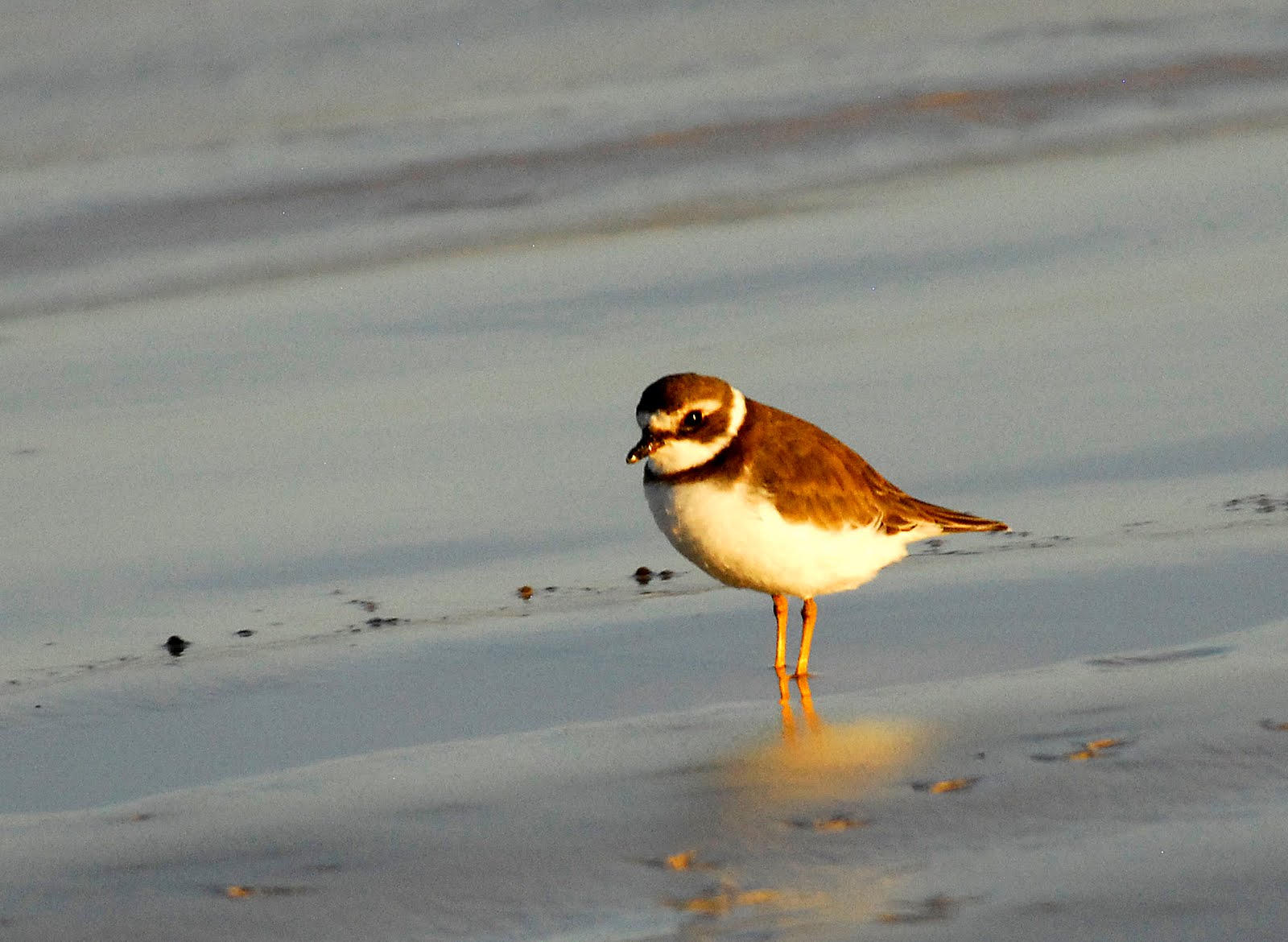
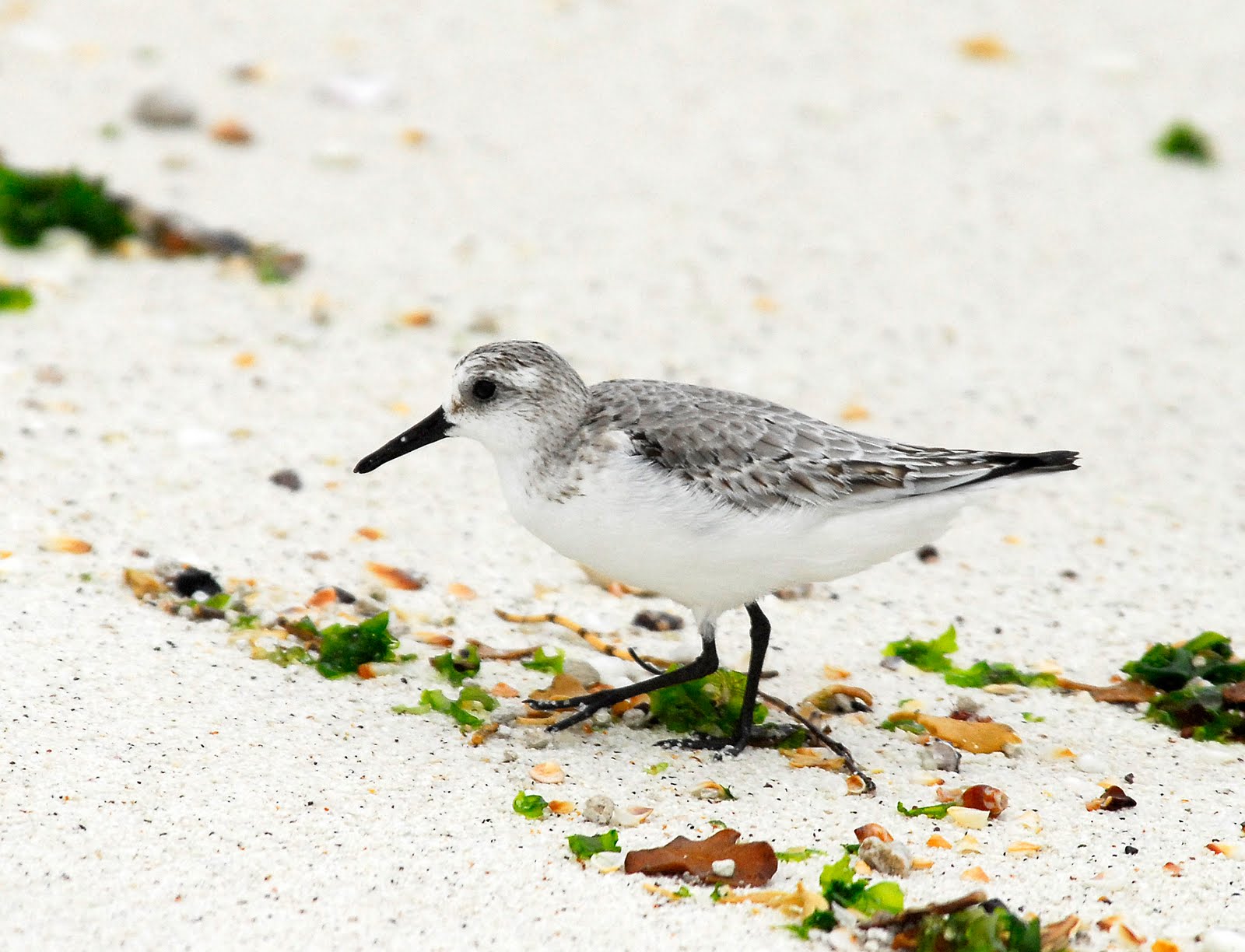
Many of the water associated birds we encountered on the Galapagos were long distance migrants, but there were also some resident species. We sighted Semi-palmated Plovers on numerous occasions. During July/August, 2010, I found this species breeding in the Pribilof Islands five to six thousands miles NW of the Galapagos.Striated Herons frequented the shorelines and potholes of most of the Galapagos Islands we visited. Some color morphs were once considered a separate species - Lava Herons - but DNA studies have determined otherwise.As their name implies, Flightless Cormorants are certainly not migrants, as they are the only species of flightless cormorants in the world. Cattle Egrets, apparently historically found in Africa, now seem to be found throughout much of the tropical and temperate world.Whimbrels have been present in many of the seaside locations I have visited in the past several years.One of the species I was especially interested in finding on the Galapagos was the White-cheeked Pintail. The only place we found them was on a volcanic pothole on Isabela Island. This species is also found in the Caribbean Islands, and it is unclear to me whether or not there is interchange between these populations.What can I say about Sanderlings? They seem to be present at some portion of the year on almost any ocean shoreline where I have visited in the Western Hemisphere. And we see them regularly during fall migration in Montana. American Oystercatchers were present on many Galapagos islands and we observed several nest sites and breeding pairs.Perhaps the target bird species that I was most anxious to observe was the Greater Flamingo. Having failed in several attempts to find them in the Florida Everglades where they occasionally occur, I was hoping my luck would change on this trip. After a half hour walk over some desolate lava flows on Isabela Island, we found four of them on a brackish water pothole. Their pink coloration in this mostly gray and black environment was striking, but fit in well with the Mangrove and other vegetation along the perimeter of the pothole. This species seems more like a tropical one so finding them in a near desert situation on Isabela Island was a real treat. In good precipitation years, their numbers are estimated at nearly 400. On at least one occasion, birds from this population have been observed on mainland Ecuador so there may be interchange with other populations in South America and the Caribbean.

24 January 2011

Land Birds of the Galapagos

The species variety of land birds on the Galapagos is quite limited which is to be expected because of the islands relatively young age and geographic isolation. But there were several species that were quite familiar to me. The first was the Vermilion Flycatcher that I have often seen in Arizona. There are also several records for this species in Montana. The bright red on the head and underparts were a welcome sight compared with the the drab colored and much more abundant Galapagos Finches. Another brightly colored species with which I am quite familiar was the Yellow Warbler, which is a common summer breeding species in Montana. The plumage of Galapagos yellow warblers is, however, a bit different from ours with the rusty cap being quite obvious. These birds are more similar to the "Mangrove" Yellow Warblers that I have seen in Mexico and they may be considered as a separate species pending DNA analysis.

Galapagos Finches - 13 species - were the most abundant land birds on the islands. Over many thousands of years, they all evolved from a single species as a result of isolation on various islands, elevational differences in habitat, and extremes of climate. They are all pretty much similar in plumage so the best way to differentiate them is by their relative size and the shape and size of their bills. This is a Small Ground Finch.Medium Ground Finch.Cactus Finches seemed to be fairly abundant.
But we found the Large Cactus Finch on only one island. There are 4 different Mockingbird species on the islands, three of which we observed. The forth species is found on an island that we did not visit. The Galapagos Mockingbird was the most common of this group and was found on a number of different islands.Hood Mockingbirds are found only on Espanola Island. They were extremely tame and often would investigate backpacks and other human items left on the beaches.Charles Mockingbirds were once abundant on Floreana Island but were extirpated by introduced rats and perhaps other non-native species. They are now found only on two small islets just to the west of Floreana where they can be viewed only from boats cruising around these islets.
We did manage to see and photograph several of them.

One of the more attractive of the native, endemic species is the Galapagos Dove. We encountered them on many of the islands but not in any abundance.

At the top of the food chain is the Galapagos Hawk. They are obviously descended from a Buteo type raptor that must have reached the islands many thousands of years ago.There was one relatively common introduced species that we saw on a number of occasions - Smooth-billed Ani. This species may pose a threat to some of the native species. It is unknown whether this bird arrived here on its own or was introduced by islanders, but it was most likely the latter.

23 January 2011

Galapagos Birds

The diversity of bird species on the Galapagos Island is not all that great, with only 70-80 species occurring on a regular basis, and another 30-40 seen only occasionally or rarely. But many of the species found there are endemic and are seen and breed only there. Others use the islands exclusively for breeding but may wander far and wide during the non-breeding season. In this first segment on birds, species associated with the surrounding ocean for their livelihood and land for breeding purposes will be featured.

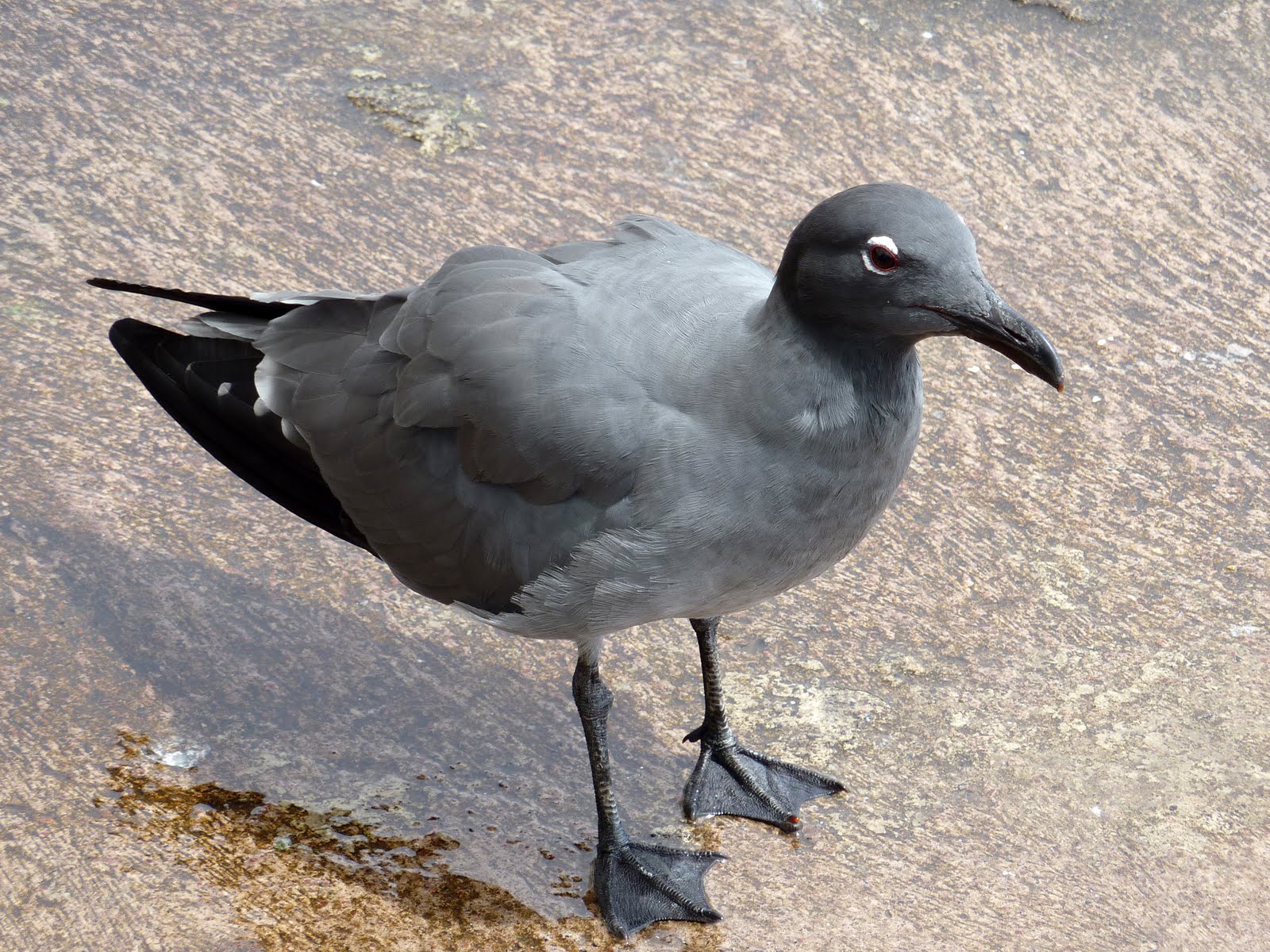
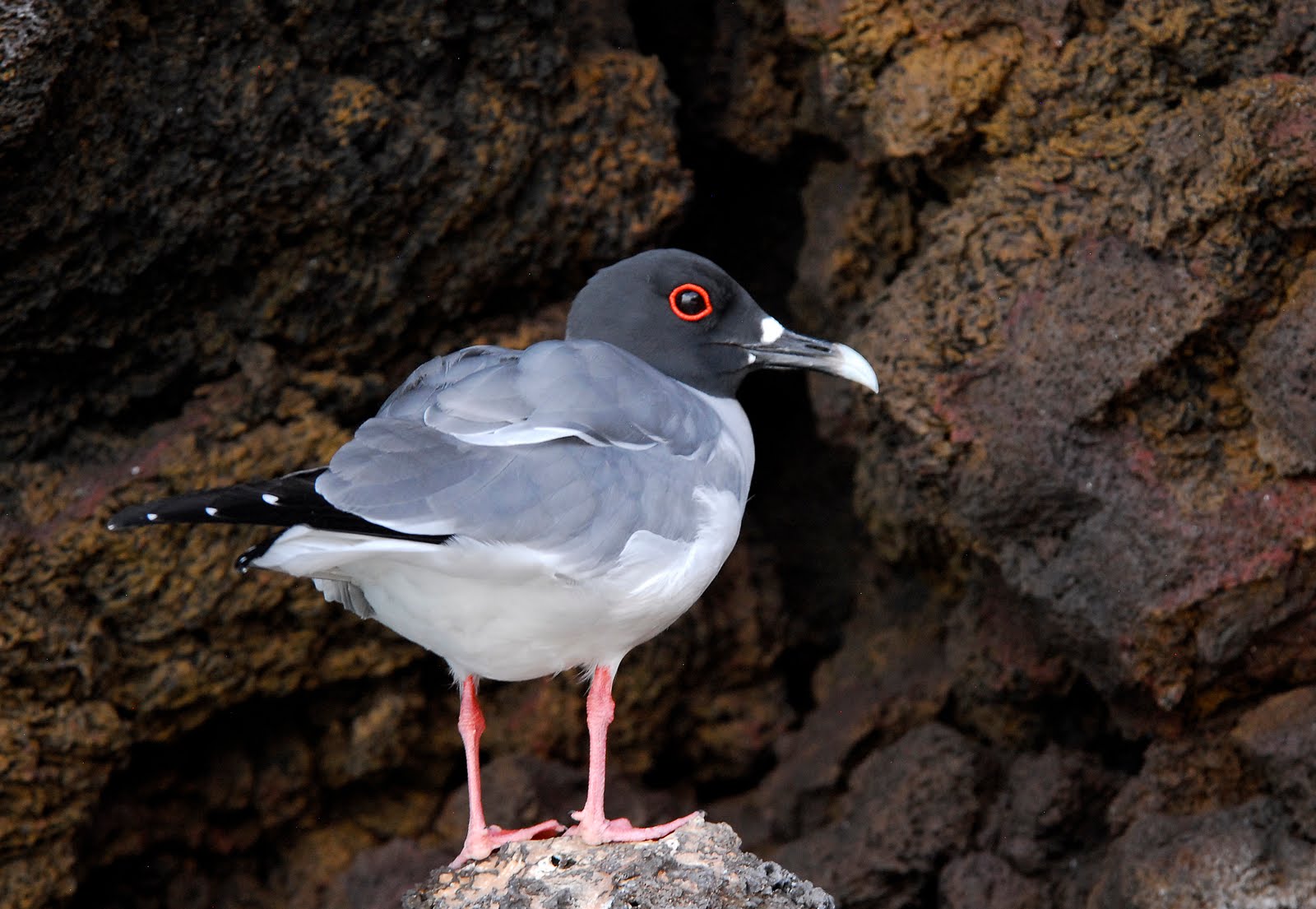
There are two gull species endemic to the islands, Lava Gull and Swallow-tailed gull, that are only very rarely seen anywhere else. We did not see many Lava Gulls, perhaps because their coloration matched the lava dominated shorelines quite well, or maybe they just weren't very common. But Swallow-tailed gulls were observed often and were really quite an attractive bird - as gulls go. There are three species of "Boobies" that breed on the islands: Blue-footed, Nazca, and Red-footed. The first two were common but we never did see any Red-footed Boobies, although several hundred thousand of them breed on one on the islands in the NE portion of the archipelago. Nazca Boobies are very similar to Masked Boobies from other regions and may have been considered the same species at one time. Blue-footed Boobies were the most common and it is not difficult to see where they got their name. They were quite tame and many had young that were about to begin flying. Galapagos Penguins were not especially abundant but we found them on several different islands. They are the second or third smallest of all penguin species and the only ones found in the tropics. They likely found their way here many thousands of years ago on the cold Humboldt Current that flows north along the South American Coast from the Antarctic.
There are two Frigatebird species on the islands, the Magnificent and Great Frigatebirds. They are very difficult to tell apart, especially the males. This male is likely a Magnificant rather than Great because of the purplish sheen of its neck feathers. The Great males supposedly have a greenish sheen. Recent DNA studies have determined that the magnificent Frigatebirds on the Galapagos have been isolated from those located in other regions for about 100,00 years, so they may be separated into a different species in the future.

Another of the endemic seabirds of the islands is the Galapagos Shearwater. It ranges widely over ocean areas during non-breeding periods.
They were commonly viewed in offshore areas during our cruise.

The following are two species that I was especially interested in seeing - Waved Albatross and Red-billed Tropicbird. This albatross species breeds exclusively on several Galapagos islands but wanders the oceans during non-breeding periods. It apparently gets is name from the wavy pattern on the neck and breast. Note the band on the right leg of this bird.
We did not encounter many Red-billed Tropicbirds, but their very long central tail feathers made them easy to ID when they were around. In the volcanic cliff areas where they nested, these tail-feathers were often the only part of the birds that we could see.